Jordan and its neighbours
£30 per person | 29 January 2027
Art Pursuits Gallery talk at the British Museum
Jordan is in the area of the Middle East often called the ‘Fertile Crescent’ where the first ‘Agricultural Revolution’ took place and the earliest farming villages developed. Some of the world’s oldest statues, up to 90cm high, were discovered at ‘Ain Ghazal near Amman. Made of lime plaster over a reed core, with traces of paint and eyes of white clay with bitumen pupils, their fixed stare takes us back 9000 years. As time passed, pottery was invented to store food, man learned how to alloy copper with tin to produce bronze, and some villages grew into walled cities with palaces and temples. The palace scullery at Tell as-Sa’idiyeh, ancient Zarethan, in the Jordan Valley, destroyed by fire c.2700BC, contained the remains of a ‘last supper’, an unwashed table setting for eleven people, with serving dishes, bowls, drinking vessels, flint knives, bone points and quantities of charred grains, olives and fruits. New peoples moved into the Levant around 1200BC, including the Peleset (Philistines), who settled the southern coast of Canaan and gave their name to Palestine. Their anthropoid clay coffins are distinctive and evocative. To the north were the Phoenicians, traders and artisans par excellence, whose alphabet was adopted by the Greeks and whose exquisite carved ivories, used to decorate wooden furniture, were coveted luxuries.
The Nabateans, nomadic tribes from Arabia, moved into Transjordan in the 4C BC, and established their capital at Petra, where they created in their lovely sandstone valleys a city unique in the ancient world. They were buried in impressive family tombs, lived in luxurious villas and dined off fine tableware, eggshell thin and decorated in brown or black on a terracotta ground. Nabatean wealth was derived from trade, particularly frankincense from South Arabia, land of the Sabaeans and the Queen of Sheba. A cuboid incense burner from Aden has the names of different types of incense in ancient South Arabian script on all four sides. Camels were essential for cross-desert trade, as witnessed by a bronze statuette inscribed with a dedication to the South Arabian moon god. When the Nabatean kingdom was taken over by the Romans under emperor Trajan in 106AD, trade routes shifted northwards and Petra ceded its importance as a great trading emporium to the oasis of Palmyra in the Syrian desert. Portrait busts of Palmyrenes, male and female, which were placed in family tombs and bear the names of the deceased, are beautifully carved and all different. They show the hairstyles, jewellery and elegant dress of the inhabitants of the wealthy desert city.
Most of the population of modern Jordan is Arab and over 50% is of Palestinian origin, displaced in 1948 and 1967. Palestinian embroidery or tatreez is remarkable in its beauty and regional variety and it is a way in which Palestinian women continue to express their creativity and identity.
This talk will be held at the British Museum. We will meet at the entrance of the museum at 11am.
Price: £30
Date:
29 January 2027
Your day includes:
- 90 minutes of lecturing from 11am to 12:30pm
Expert Lecturer
Sue Rollin
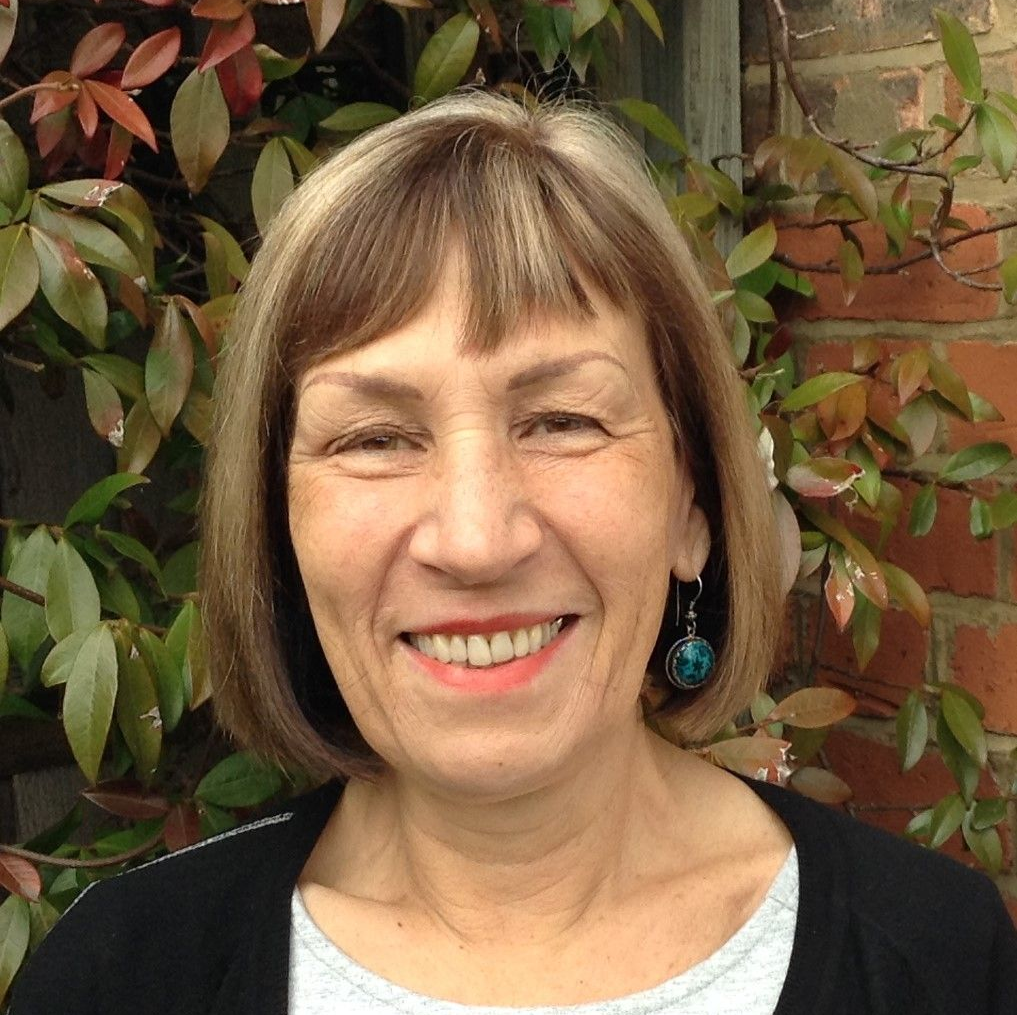
Sue Rollin specialises in the ancient and Islamic Middle East, India and the Mediterranean. An archaeologist, historian and linguist by training, Sue lectures for the Arts society and the V&A and has led Study Tours in Spain, Sicily, Morocco, the Middle East, Central Asia and India. Sue speaks Spanish, Italian, French and German. She is co-author of two travel guides: the Blue Guide to Jordan and Istanbul: A Traveller’s Guide.