JAPAN The Pursuit of Beauty: Gardens, Temples and Cutting-edge Architecture | NEW DATES
11 days | £7995 per person without flights | 12 - 22 November 2026
The Pursuit of Beauty: Gardens, Temples and Cutting-edge Architecture in Japan
Japan is a country of exhilarating contrasts, where hyper-pop culture abuts ancient tradition, a country at the cutting edge of technology with a great admiration for traditional craftsmanship, a nation with the deepest reverence for nature that has built some of the world’s most futuristic cities. For many Western travellers, it beckons inexorably and yet it remains a mystery. Perhaps this can be explained by the fundamental difference between Western and Japanese pursuits of beauty; where the West is perhaps preoccupied with the final product, the Japanese ideal concerns itself far more with the process, to the extent that aesthetics are an integral part of daily life.
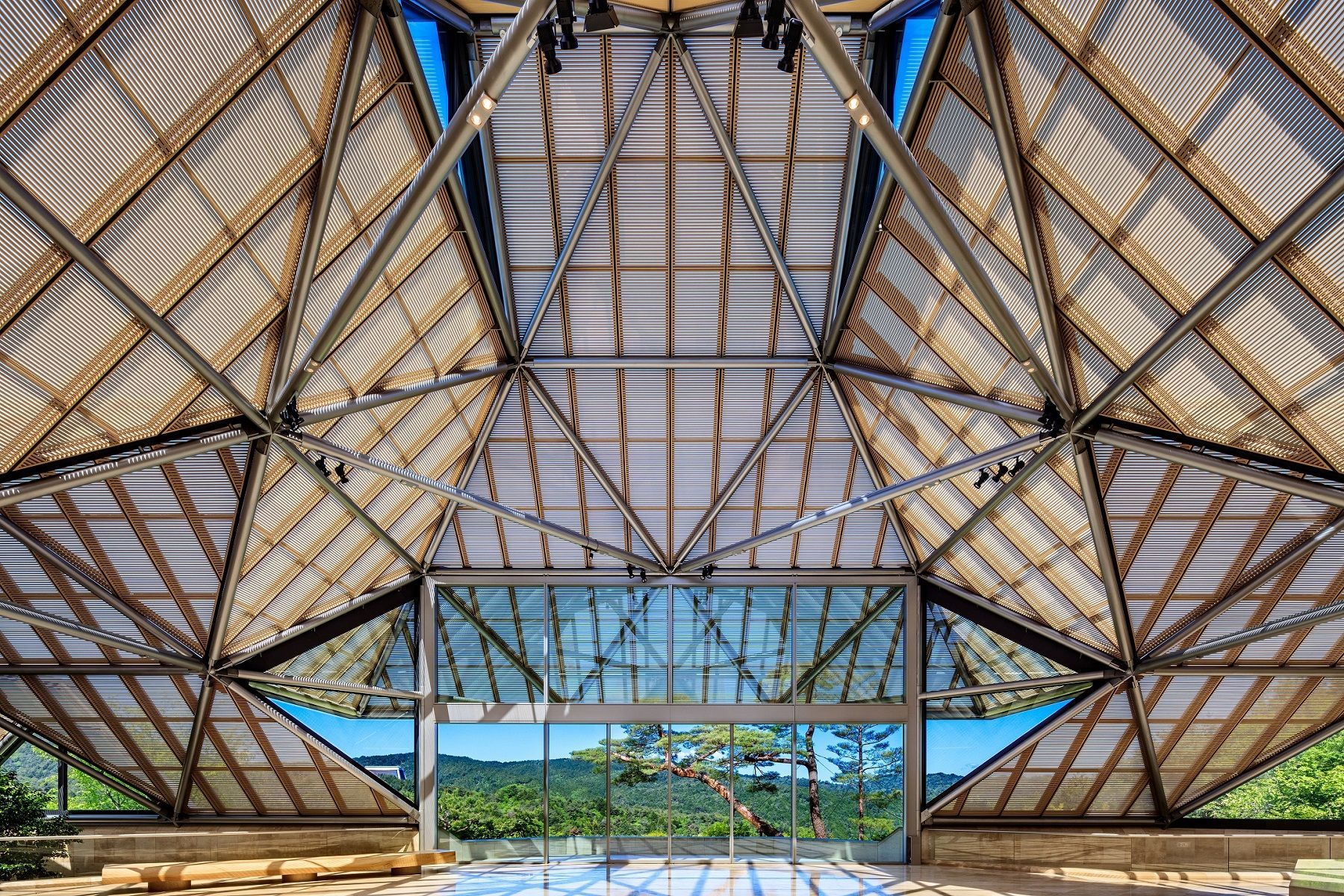
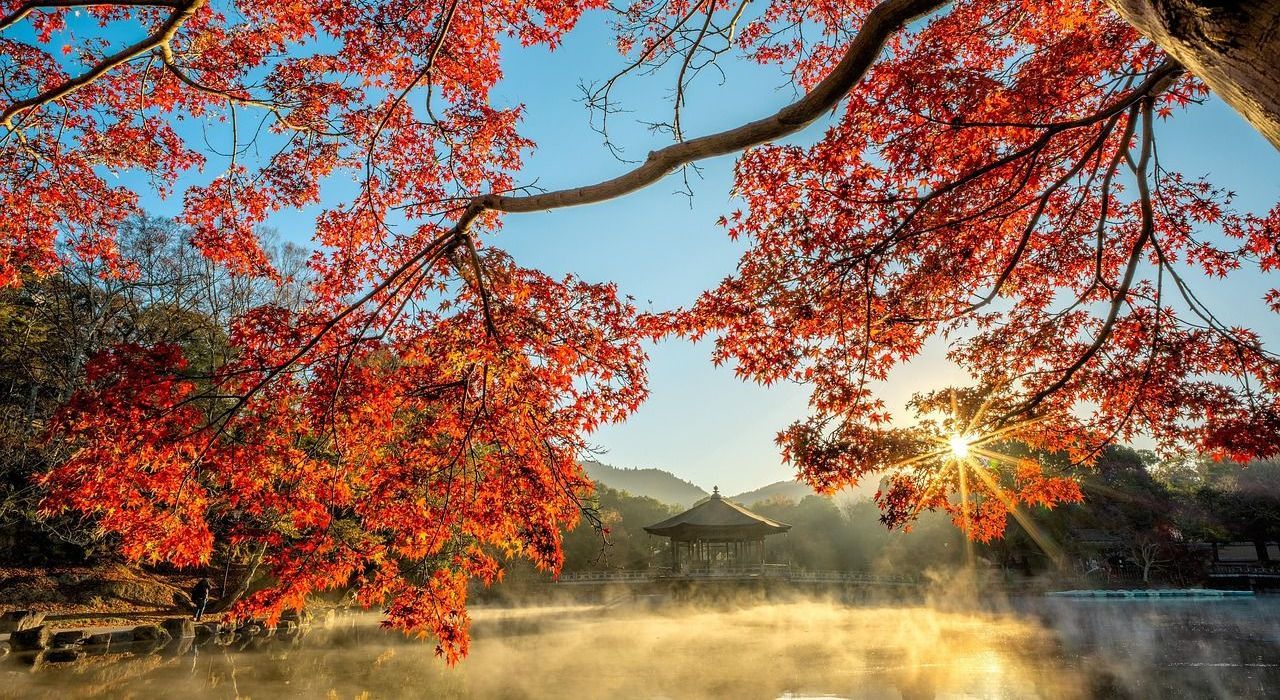
The theme of our tour will take as its starting point this devotional approach to the pursuit of beauty. In gardens from Nara to Tokyo we shall see how some 1,600 years of gardening tradition has evolved to highlight and express nature through the seasons in a deeply symbolic and almost painterly way. We will also encounter a kaleidoscope of architectural styles, from a 7th-century timbered temple, to the contemporary ingenuity of I.M. Pei’s Miho Museum. There will, of course, be ample opportunity to sample Japan’s exquisite cuisine, an art form in its own right. This tour is an unmissable chance to journey deep into the heart of a culture that can, at times, seem dauntingly different. In the company of an expert guide, allow Art Pursuits to reveal the magic and beauty of this captivating country.
Day to day Itinerary
Day 1
Evening arrival at Osaka Kansai airport and transfer by private coach to your hotel in Nara, Japan’s ancient capital. Evening meal served in your room.
Day 2
Private transfer to the Horyu-ji temple complex outside Nara – the first great Buddhist temple-complex in Japan, of immense and peaceful proportions. We find some of the oldest extant wooden building in the world here, as well as a treasure-house of Early Buddhist art. We walk to the nearby Chugu-ji Temple, which houses one of the loveliest and most attractive religious sculptures in Japan – the camphor-wood figure of the Maitreya Buddha (the Buddha of the Future). After a light bento-box lunch in the Persimmon Restaurant, we return to Nara via Toshodai-ji Temple, with its beautiful proportions and ancient wooden buildings.
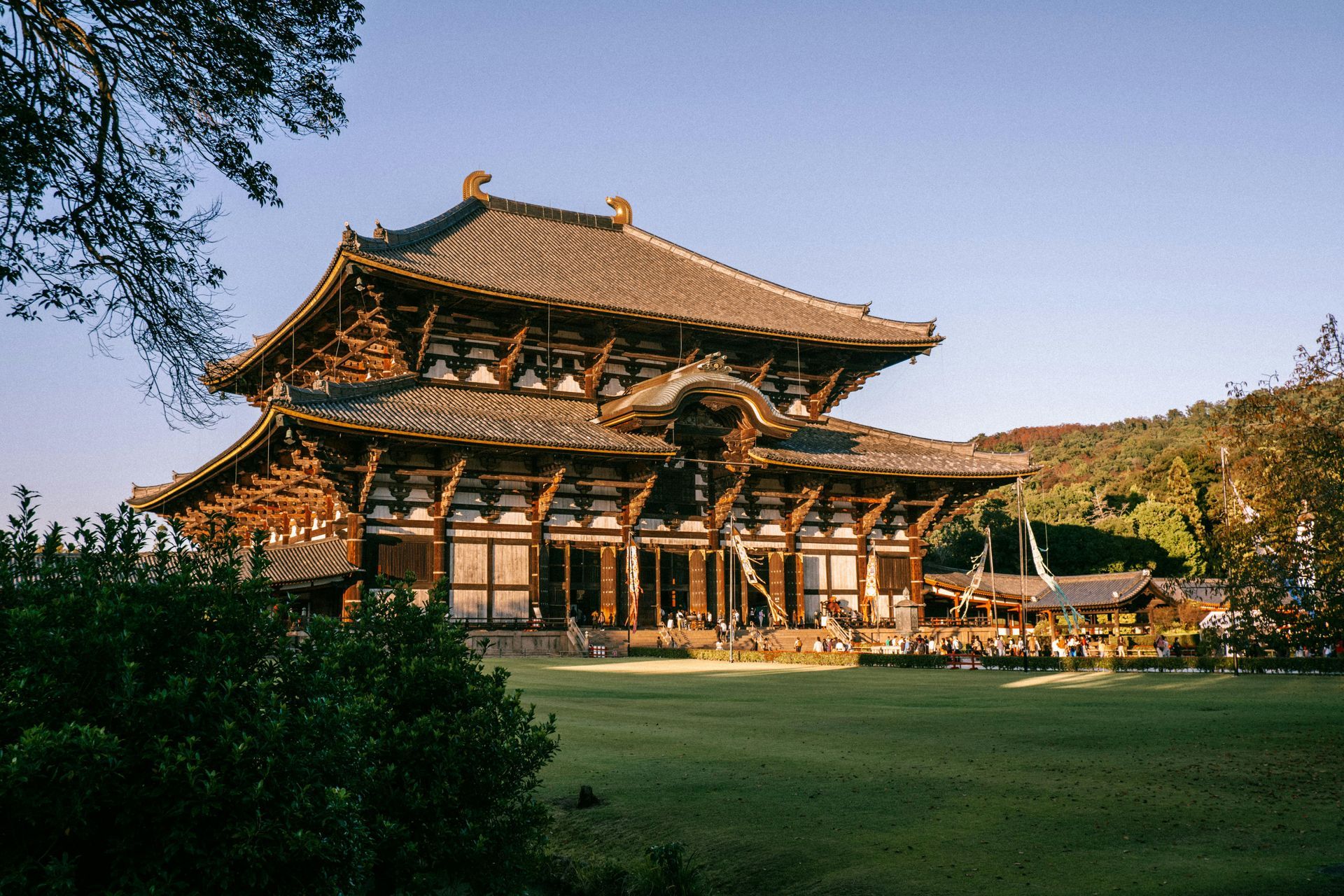
Return to hotel for a rest. Later in the afternoon, leave for Japan’s historically greatest temple, Todaiji, founded in the 8th century, and still today, the largest, standing, roofed, wooden structure in the world, built around a massive, twelve-hundred-year-old, Bronze figure of the Buddha Vairocana. We can stay in its numinous shadow until closing time.
Dinner in Nara’s in market area and return to hotel.
Day 3
Coach transfer to the little-visited Shin-Yakushi-ji temple. Going inside this ancient temple is like entering a primaeval cave full of 8th century clay sculptures of the Guardians of Heaven, ranged all around. Waalk through Nara Park and its sacred, Prehistoric Forest to the very different, bustling world of the Kasuga Taisha Shinto Shrine. Deer and stone lanterns are everywhere, and much activity of popular prayer. We continue to an attractive contemporary abstract garden within the city’s Manyo Botanical Enclosure; and then continue again on foot to the more traditional Japanese stroll-garden of Isui-en. A light lunch in nearby in the beautiful wooden spaces of Saryo Zeze Café. After lunch we walk across to Kofukuji Temple, the great foundation of the Fujiwara family, to visit its Sculpture Hall, full of treasures, including the rare hollow lacquer figures of holy-men and deities, which have survived in remarkable condition, since the 7th century. (The temple’s great Pagoda is currently closed for restoration, unfortunately.)
Transfer back to the hotel for an independent evening.
Day 4
Check-out of the hotel, and leave Nara in our private transportation, with luggage, for a one-hour drive up through forested hills, towards the Miho Museum. This is I.M. Pei’s masterpiece of choreographed architecture and design. Just visiting the imaginatively conceived museum buildings is an unforgettable experience; but they house an eclectic collection of art, which includes not just Japanese works, but also examples of Persian, Egyptian, Chinese, Hellenistic and Gandharan Art. A quiet lunch – independently – in the Museum’s Peach Valley Restaurant or Pine View Tea Room.
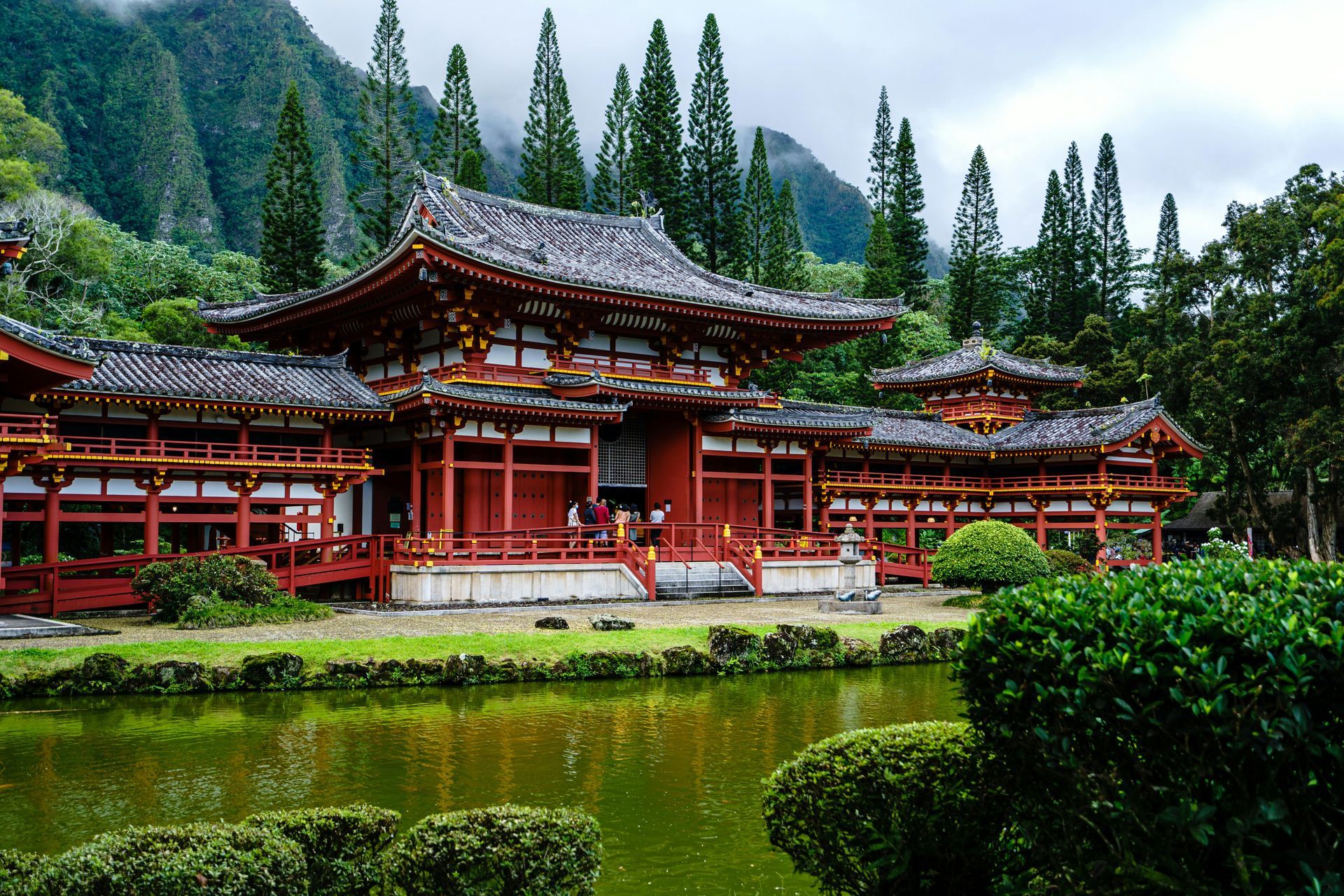
In the early afternoon we continue to the temple of Byodo-in, one of the great creations of the Fujiwara’s ‘golden era’, set on the edge of a small lake, which reflects the temple’s bird-like form. We will visit the interior of its 11th century Phoenix Hall and the celebrated Amida image, as well as the Temple’s Museum, full of tiny, gilded, flying ‘angels’ or bosatsu. This is a timely introduction to the refined world of Heian elegance (the world of Lady Murasaki’s Tale of Genji), which we encounter as we move from the archaic culture of Nara, towards the later centuries of Japan’s greatness, in its new capital of Kyoto.
Our private transportation takes us on to Kyoto, for check-in to our hotel in the city. We will dine together again this evening in a local restaurant.
Day 5
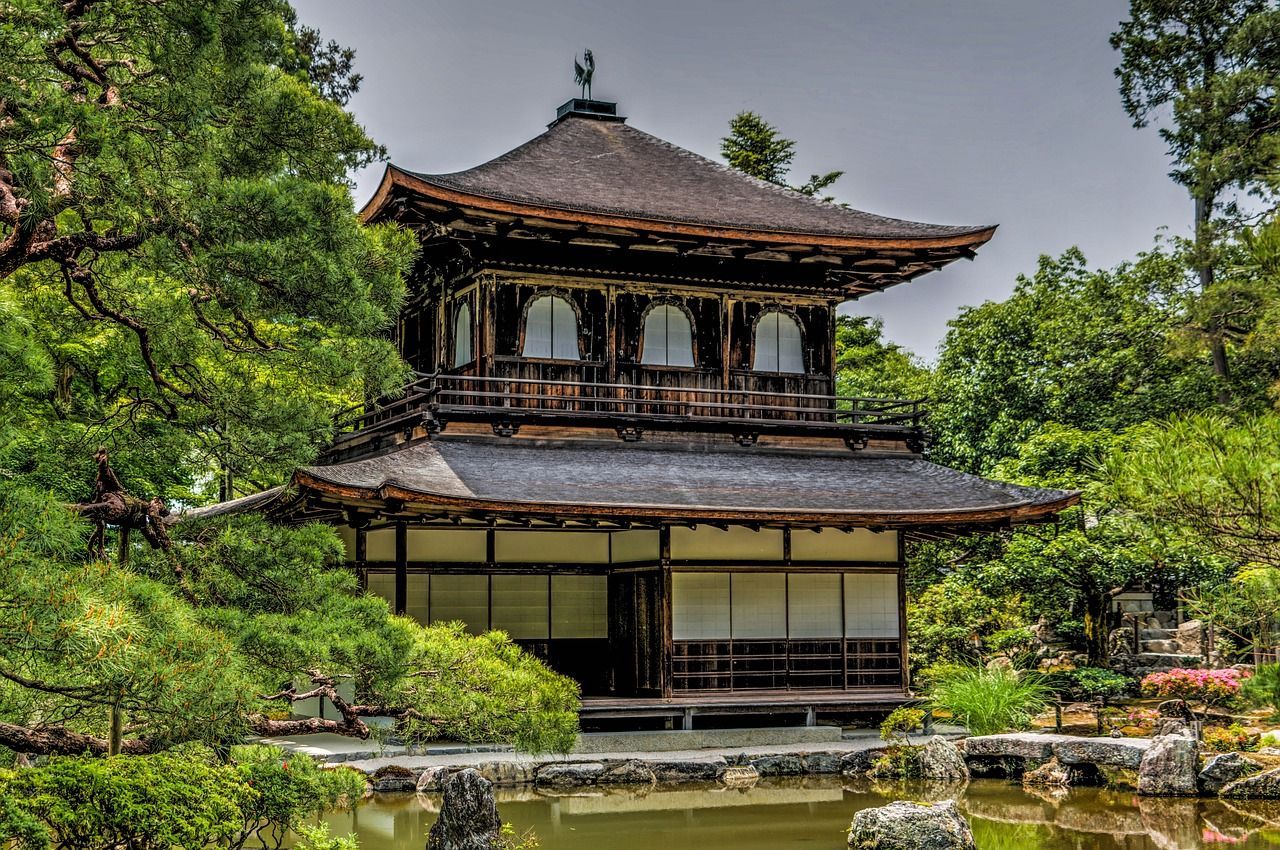
Early departure to Ginkaku-ji (the ‘Silver Pavilion’) surrounded by its ‘moon-viewing’ garden. This is a very important and influential garden for the history of Japanese landscape and garden design, created during a time of great civil upheaval in the 15th century. We then follow the so-called ‘Philosopher’s Walk’ below the Eastern Hills of Kyoto. We might stop for coffee by the small canal, to allow the images of Ginkaku-ji to settle. Then we continue to the quiet and atmospheric Honen-in. The grave of Jun’ichiro Tanizaki, the novelist, is in the cemetery here. Continue beside the tree-lined canal, towards the Nanzen-ji Zen temple-complex. There are very fine Zen gardens, sub-temples and rare screens here. Time to absorb this relaxedly and contemplatively. Our morning will finish with a visit to the nearby Konchi-in, with its ‘Crane and Turtle’ garden.
Lunch at Junsei: this is a well-known restaurant which specialises in tofu, and in the many different and delicious ways of preparing it. Tofu does not set the world on fire, I know, but this restaurant may just surprise and convert you..
After lunch we can continue by foot to the Chion-in, and thence through to the lively Yasaka Shinto Shrine. At this point we are at the heart of down-town Kyoto with the possibility of some time for shopping.
Independent evening in downtown Kyoto and then return by taxi to our Hotel.
DAY 6
By coach to Genko-an temple, with its unforgettable ‘infinity’ window, and rich history. Continue to Entsu-ji, a little-known temple and garden, which is designed around a ‘borrowed’ landscape of Mount Hiei. A place of great peace.
We continue downhill to a more famous site: the monumental wooden buildings at the entrance of the large and active Daitoku-ji Monastery complex; and then, within the complex, to the minuscule garden of Daisen-in – one of the most succinct and meaningful of all Zen gardens.
Lunch within Daitoku-ji at Izusen and afterwards, transfer to the shores of the Katsura river at Arashiyama – frequently drawn and painted by the Japanese masters. We will visit one of Kyoto’s oldest and most important historic gardens, at the Temple of Tenryu-ji - a site too important and too remarkable for us to miss. Afterwards, a walk in the bamboo grove above Tenryu-ji, followed perhaps by some tea in Arashiyama, not far from its historic bridge….
This evening a wonderful Teppenyaki meal in Kyoto at Misono.
DAY 7
(Please have your heavy luggage ready in the morning for collection to be sent ahead today to the Tokyo Hotel. It will be in your room when you arrive tomorrow.)
Transfer across town for a visit to Ryoan-ji, with its world-famous, Zen meditation garden created from gravel and fifteen stones. The temple also has a much more ancient – and often overlooked – lake-garden surrounding the temple complex. If you have energy enough, we can go the short distance also to Gingaku-ji (‘The Golden Pavilion’ garden), the most famous and most visited of Kyoto’s temples and gardens.
Today a leisurely Italian lunch at Casa Bianca. Our vehicle(s) will then take us from the hotel, to visit the gardens, temples and parkland of the venerable Tofuku-ji monastic complex. This is one of the great Zen architectural and garden complexes of Japan. The colours, especially of the maple trees, in the surrounding park can be enchanting and unforgettable in November. They are little changed now from how they appear in many drawings and prints of Hiroshige. We can visit until closing time. There is much to see here: including some modern gardens exquisitely designed by Mirei Shigemori, Japan’s greatest garden designer of the mid-20th century. Dinner is independent tonight.
DAY 8
Check out and leave to board the Shinkansen ‘Bullet Train’ (Hikari 500) and travel east and north to the coastal city of Atami (approximately two and a half hours travel-time). Private transport will meet us at the station and take us to our next state-of-the-art museum (reached by seven flights of escalators with varying light effects, and works of art along the way). The privately owned MOA Museum of Art, houses a fascinating collection of Japanese art. There are often some screens by the great painter, Ogata Korin, on show. Independent lunch at the Museum Café.
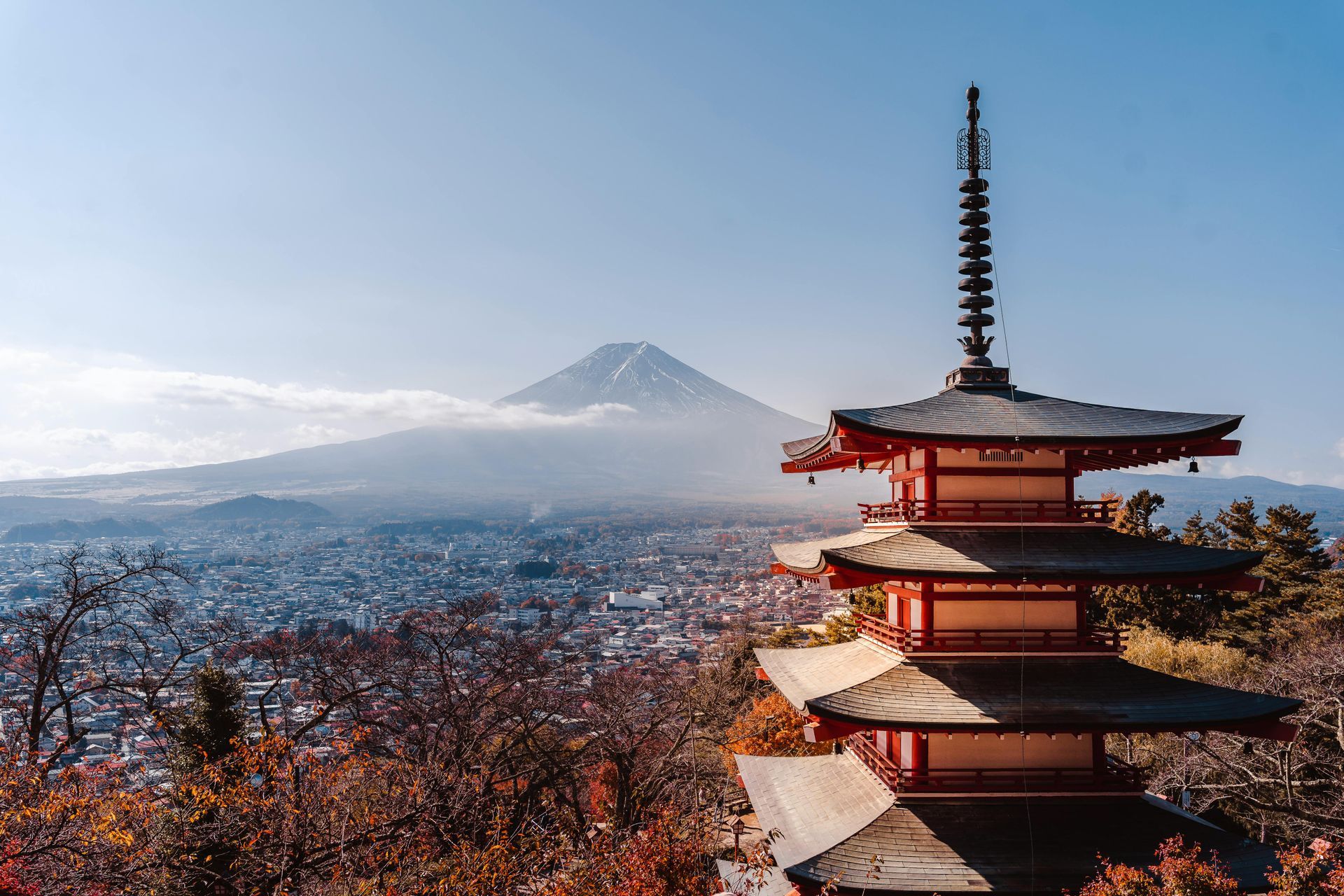
Our route continues on up the mountains behind Atami, to a potentially excellent viewing point for Mt. Fuji – if (fingers crossed) cloud and weather permit. We then continue to Hakone, to visit the wide-ranging collection of painting and ceramics at the recently opened Okada Museum. After the visit, there are reviving foot-baths in the natural, geothermic waters available for the foot-sore…Continue to Tokyo, in our private transport, and check-in to the BLOSSOM HIBIYA HOTEL, close to the park of Hibiya. This is a modern hotel, on the 20th floor (and above) of a building which overlooks the Imperial Palace Park. This is the area around which the city of Tokyo first began to coalesce into a national capital.
A cheap and cheerful evening meal at an Italian restaurant, just across the road from the hotel, if you are happy to have a change from Japanese fine cuisine.
DAY 9
Transfer across town from our hotel to visit a great, Japanese ‘stroll-garden’: Rikugi-en Garden, was laid out at the beginning of the 18th century. A short ride from here takes us to the Tokyo National Museum (of Japanese and Asian Art) in Ueno Park. We begin with Yoshio Taniguchi’s serene pavilion of 1999, within the compound of the National Museum, which contains the exquisite 7th and 8th century Treasures from Horyu-ji – the ancient monastery which we visited on the very first morning in Nara.
From here, we can cross to the main body of the museum, so as to visit its comprehensive collection of painting, byobu screens, lacquer objects, and sculpture of all kinds. This will also give us a glimpse of works by the great print masters, Hokusai, Hiroshige, Utamaro, and others. After an independent lunch we head across the Sumida River to the small Sumida Hokusai Museum, which is in the neighbourhood of Edo (Tokyo) where the painter lived. This is a small collection which shows well the range and the development of Hokusai as an artist.
Return to hotel for an independent evening.
DAY 10
Walk from hotel across to the Imperial Palace Gardens to see the kernel at the heart of Tokyo’s huge evolution over the centuries. Brief transfer to the famous Ginza area of Tokyo for shopping and an independent lunch. After lunch our transportation will take us to the Meiji Jingu (National Shinto Shrine) and its beautiful surrounding park; followed by a walk or drive through the fashionable streets of Omotesando, and up to the Nezu Museum – a small, but select private collection of the highest quality, with a delightful garden and tea houses. Return transfer to hotel. A Final Dinner of exquisite Japanese cuisine, perhaps, at one of the Japanese restaurants in the Chinzanso Hotel – either at the Kinsui or Mokushundo restaurant.
DAY 11
Today we bid farewell to Japan and transfer to Tokyo Haneda Airport.
JW Marriott Hotel, Nara
The JW Marriott Hotel in Nara is a luxurious and elegant hotel in Nara, Japan, blending modern sophistication with traditional charm. Located near historic attractions such as Todaiji Temple and the Nara deer park, it offers spacious rooms, gourmet dining, a spa, and a fitness centre. Experience exceptional luxury and tranquillity in the heart of Nara.
Hotel Granvia, Kyoto
The Hotel Granvia is set within the contemporary Kyoto Station complex, this grand hotel features modern art and a vast selection of restaurants for guests to indulge in local delicacies. Each room includes a variety of carefully selected amenities, complimentary Wi-Fi and room service.
The Blossom Hibiya, Tokyo
The Blossom Hibiya is a modern and stylish hotel in Tokyo's fashionable Hibiya district. With chic rooms and convenient amenities, it offers a comfortable retreat near popular attractions, shopping destinations and dining options. Guests staying at The Blossom also have access to privileged views across the vibrant city of Tokyo.
Join Direct: £7995
Single Supp: £1050
Deposit: £550
Departure Dates:
12 - 22 November 2026
Duration:
10 nights / 11 days
Your Holiday Includes:
- Three nights’ bed and breakfast at the JW Marriott Hotel Nara
- Four nights’ bed and breakfast at the Hotel Granvia Kyoto
- Three nights’ bed and breakfast at The Blossom Hibiya
- Private coach transfers and excursions
- Four evening meals and four lunches
- Guided visits to the sites and monuments listed in the programme
- Services of the tour lecturer and a tour manager
- All entrance fees, taxes, and gratuities for coach drivers and serving staff
Tour Lecturers

Nigel McGilchrist
Living and teaching in the Mediterranean area (Italy, Turkey and Greece) for over forty years, Art Historian Nigel McGilchrist began work with the Italian Ministry of Arts in the field of wall painting conservation. He has taught for universities both in the USA and in Italy, and now lectures independently for the Smithsonian Institute in Washington, the Santa Barbara Museum of Art, and for a number of other cultural organisations.. He has accompanied over eighty art and architecture tours in both Europe and Asia. With a particular interest in Buddhism and its art, and a family connection with Japan, he has taken groups to Bhutan, India, Cambodia, Thailand and Japan. He is the author of a 20-volume series of books on the art, history and architecture of the Greek Aegean Islands; and his most recently published book on Pythagoras (When the Dog speaks, the Philosopher listens) draws on the deep connections between Greek and Eastern philosophy.
Travel Information
The price does not include extras at the hotels or travel insurance.
Flights are not included for this tour.
Please note that Art Pursuits use hotels of character featuring a variety of rooms & styles.
Stamina
Please note that most of our tours involve a large amount of walking, across uneven ground and often without the opportunity to sit down for at least half an hour. We ask that clients inform us if they have difficulties before booking to avoid any issues whilst on tour.