VENICE The Magnificence of the Venetian Scuole | New!
6 days | £3945 per person with flights | 14 - 19 September 2027
The Magnificence of the Venetian Scuole
During the second half of the 13th century, several lay confraternities began to spring up across central-northern Italy. Conceived for purposes of mutual aid or religious worship, they aligned themselves with Christ, the Virgin Mary or a patron saint and it was in Venice, where the confraternities were known as scuole, that they found their apogee. Their members came from the middle classes, skilled—and often highly successful—tradesmen and professionals, who, despite being excluded from the oligarchic rule of the republic, nonetheless raised these confraternities to positions of considerable prestige and power in Venetian society.
By the beginning of the 15th century, there were distinct types of scuole in operation; the scuole of arts and crafts, protecting the interests of the workers associated with specific trades, the national scuole, uniting members of foreign nationality, and the devotional scuole, including the Scuole dei Battuti (beaten ones), who practiced public self-flagellation for the redemption of their souls. As the confraternities developed, they came to be recognised under two broader groups, the scuole piccole, smaller associations of artisans, devotionals and nationals, and the scuole grandi, initially encompassing many of the more dominant Scuole dei Battuti. Napoleonic rule was the death knell for the Venetian scuole but in the six centuries prior to this, they shaped Venice socially, politically, artistically and visually; integrating foreign communities, offering important civic roles for those excluded from power, and commissioning some of the city’s grandest buildings and art. Indeed, the confraternities often drove each other to ever more elaborate commissions, striving to project the greatest display of wealth and standing. Join us on this new Art Pursuits tour as we seek out the treasures of the scuole, uncovering the fascinating social history that gave rise to some of Venice’s most important cultural landmarks.
Day to day Itinerary
Day 1
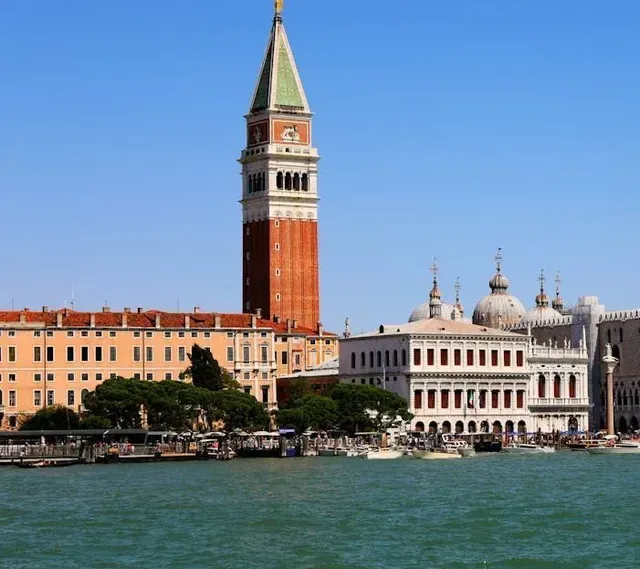
Fly from London to Venice. On arrival, transfer by private water taxi to our elegant and historic 4-star hotel. After welcome drinks, we stroll out for an orientation walk around the spiritual and political heart of Venice, Piazza San Marco, located just 50 metres from our hotel. Continue to dinner in a charming Venetian restaurant, a convivial opportunity to relax with your fellow travellers and the end of your first day.
Day 2
A day devoted to the origins and development of the Venetian scuole, which ranged immensely in scale and wealth. We will spend the morning exploring the Castello district, a working, maritime area which was historically settled by sailors, shipwrights, artisans and merchants—many foreigners among them —connected to the city’s sea trade. Our first stop is San Giorgio degli Schiavoni, a scuola piccola founded by the city’s Dalmatian community in 1451 and which contains Carpaccio’s narrative canvases. Nearby, the church of San Giorgio dei Greci, centre of the Scuola dei Greci and notable as the first Orthodox church to be built in Italy for a Greek community, punctuates the sky with its distinctive leaning tower. In the afternoon, we will visit one of the oldest and wealthiest scuole, the Scuola Grande di San Marco. Founded in c.1260 as a Scuola dei Battuti, its influence grew to such height that it adopted the name of the city’s patron saint in 1437. Today, the magnificent building with its splendid trompe-l’œil detailing serves as the main entrance to the city’s hospital but also houses a fascinating medical museum and library. Continue to the Basilica SS. Giovanni e Paolo, grandest presence of the Dominican Order in the lagoon, with many splendid marble monuments commemorating Venice’s doges. Evening at leisure.
Day 3
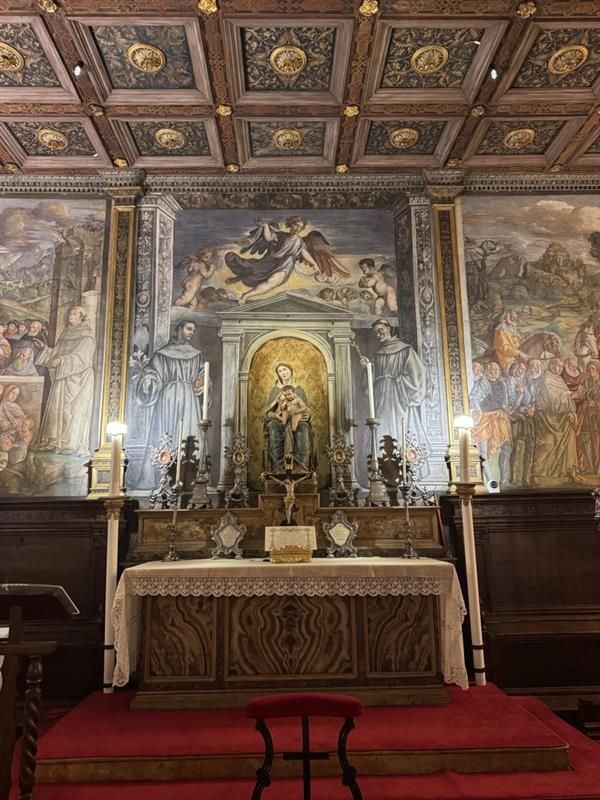
Walk to the Scuola Grande di San Rocco. Here, the vast and tempestuous paintings of Tintoretto proudly signal the wealth and power of one of the richest Venetian scuole and serve as an impressive introduction to today’s theme, Renaissance scuole decoration. The adjacent Church of San Rocco was built to enshrine the body of its titular saint and contains a particularly fine reliquary altar. After an included lunch we visit the Church of San Giacomo dall'Orio, which shared close links with many important scuole, such as the Scuola del Santissimo Sacramento, which commissioned the awe-inspiring carved and gilded ceiling, with paintings attributed to Paolo Veronese. Some free time before an early evening private visit to the Scuola Grande di San Giovanni Evangelista, among the oldest and most prominent of the Venetian scuole. Originally a modest 14th-century building, the architecture was extended and developed as the scuola’s economic and religious importance grew, resulting in the monumental complex that we see today. The work of the leading architects of the Venetian Renaissance was combined with the grandiose paintings of Carpaccio and Bellini, now housed in the Accademia Gallery, to powerful effect. Evening at leisure.
Day 4
Walk to the Accademia Gallery, where we will spend the morning seeking out the work of the great Venetian painters, originally commissioned by the scuole. The building itself occupies the former Scuola Grande di Santa Maria della Carità and houses masterpieces such as Carpaccio’s narrative cycle of Saint Ursula and The Miracles of the Relic of the True Cross cycle, removed from the Scuola Grande di San Giovanni Evangelista. The latter features paintings by Bellini and Carpaccio and offers a fascinatingly detailed visual record of 15th-century Venice. In the afternoon, we explore the Baroque splendour of the Scuola Grande dei Carmini, which includes Tiepolo’s sublime ceiling paintings on the theme of the exaltation and glorification of the Scapular. Later, we enjoy a concert in the splendid Baroque environs of the San Teodoro, another former scuola grandi.
Day 5
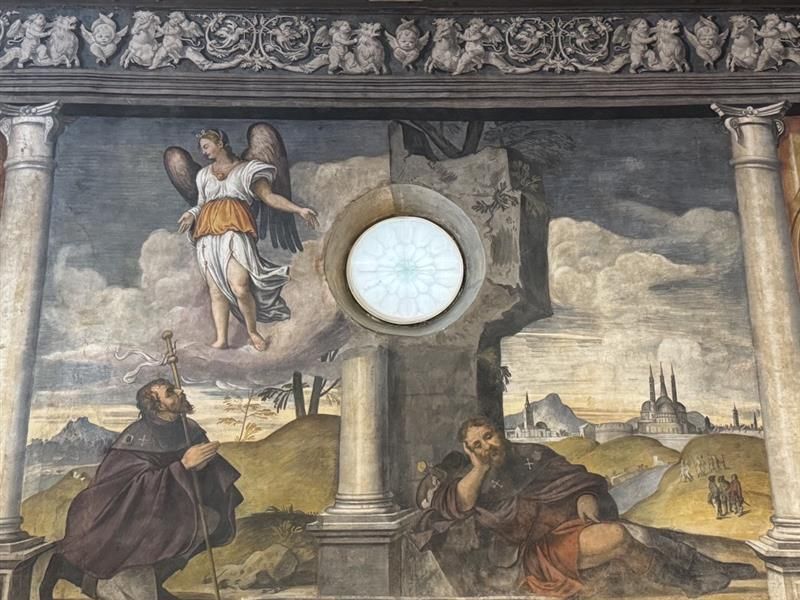
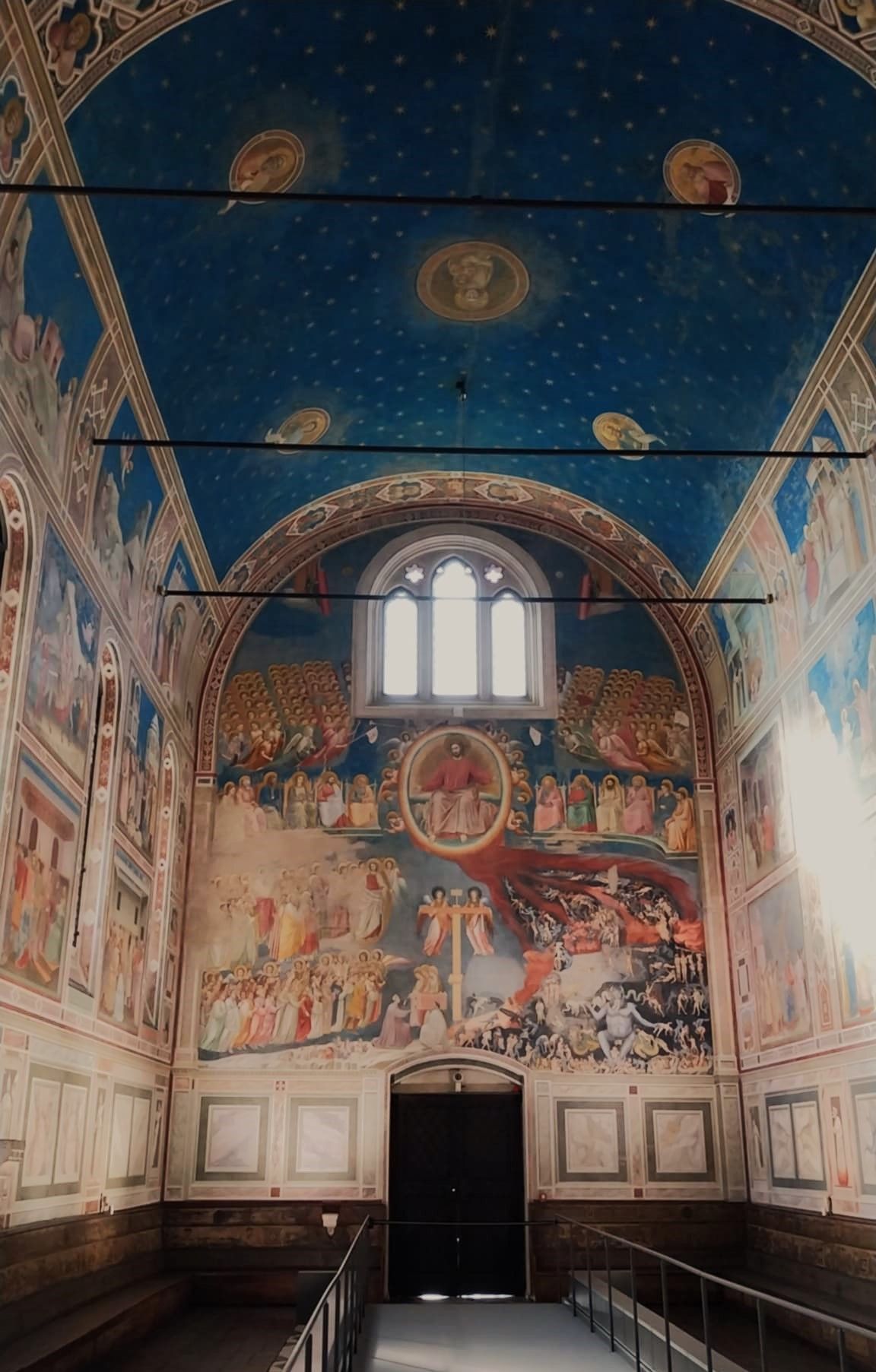
By coach to Padua, to spend the day exploring scuole of this neighbouring city, but not without first visiting the jewel in Padua’s crown, the Scrovegni Chapel. Home to Giotto’s unparalleled fresco cycle and painted in the early 1300s, the cycle of 38 remarkably well-preserved frescoes is considered a pivotal milestone in the development of Western painting. Nearby, the Eremitani Museum presents artefacts from Padua’s Roman and pre-Roman history, as well as works by Bellini, Giorgione, Tintoretto and Veronese. Continue on to the Oratorio di San Rocco, sumptuously frescoed with scenes from the life of Saint Roch. In the afternoon, explore the Oratorio di San Giorgio and the Scuola del Santo, in which we will encounter a cycle of frescoes depicting the life of Saint Anthony, including early works painted by a young Titian. The Basilica Santa Giustina, dedicated to one of Padua’s four patron saints sits on the southern edge of the city’s historical centre. Initially built in the 6th century, the enormous basilica that stands today is a 16th-century rebuild and is among the largest Christian churches in the world. Treasures housed within include Paolo Veronese’s altarpiece, depicting the Martyrdom of Santa Giustina and the reputed mortal remains of St Luke the Evangelist. Return to Venice in the evening and enjoy a final group meal together.
Please note that this day is subject to change
DAY 6
Our last morning in Venice affords us the time to visit Ateneo Veneto, a cultural institute located in the former Scuola di San Fantin. Associated with the nearby Church of San Fantin, the Scuola di San Fantin was notable for its very specific charitable mission of comforting prisoners condemned to death. After lunch, transfer to Venice airport for our return flight to London.
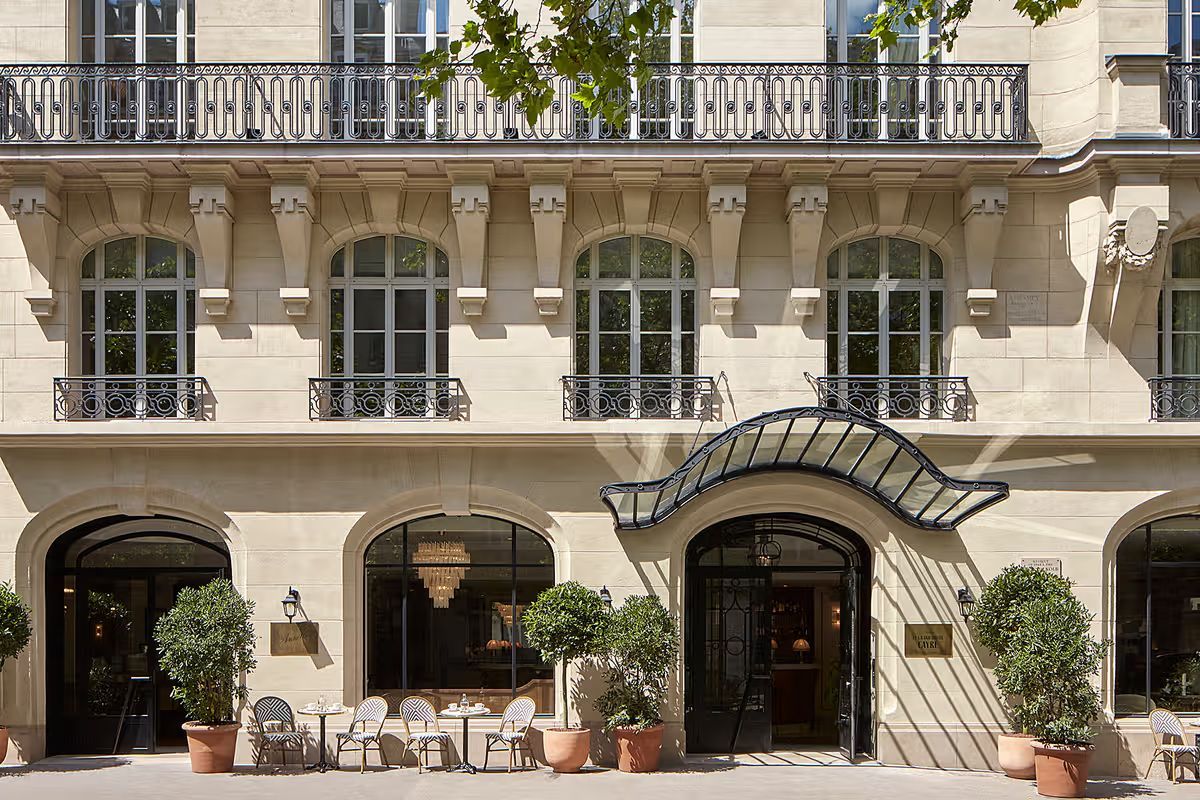
Hotel Cavalletto & Doge Orseolo
The Hotel Cavalletto & Doge Orseolo overlooks the picturesque Orseolo Basin, one of the most enchanting settings in Venice’s historic centre, and offers an unrivalled location just 50 metres from the splendour of St Mark’s Square. With a long tradition of Venetian hospitality, the hotel combines timeless charm with comfort and attentive service. Guests can enjoy elegant Venetian-style rooms and a warm, welcoming atmosphere, complemented by a courteous and professional team dedicated to making every stay memorable.
With Flights: £3945
Join Direct: £3795
Single Supp: £485
Deposit: £450
Departure Dates:
14 - 19 September 2027
Duration:
5 nights / 6 days
Your Holiday Includes:
- Return flights (Economy class) from London to Venice
- Five nights' bed and breakfast at the Hotel Cavalletto
- Private coach transfers and excursions
- Two evening meals and one lunch
- Guided visits to sites listed in the programme.
- Services of the tour lecturer and tour manager.
- Detailed programme and study notes.
- All entrance fees, taxes, and gratuities for coach drivers and serving staff
- Double length visit to the Scrovegni Chapel in Padua and private visit to the Scuola Grande di San Giovanni Evangelista
Tour Lecturers

Dr Marie-Louise Lillywhite
Marie-Louise Lillywhite is a research associate at Keble College and a member of the History Faculty at Oxford University. She is a specialist in Northern Italian Renaissance Art and lived for many years in Venice, where she taught at the University of Warwick. Marie-Louise has published on topics that include aspects of confraternal artistic patronage in early-modern Italy; seventeenth-century drawings of women and children; the limits of artistic liberty in post-Tridentine Venice; and twentieth-century garden design in Sri Lanka. She is currently putting the finishing touches to a book called 'Reforming Art in Renaissance Venice', to be published by Cambridge University Press next year. This explores how artists articulated belief in the decades following the Reformations, at a time when the significance and power of the sacred image was highly contested by both Protestants and Catholics.
Travel Information
The price does not include extras at the hotels or travel insurance.
Please note that Art Pursuits use hotels of character featuring a variety of rooms & styles.
Stamina
Please note that some of our tours can involve a fair amount of walking, sometimes across uneven ground. Please contact us if you would like more information.